

 TR
TR FR
FR ES
ES RU
RU RO
RO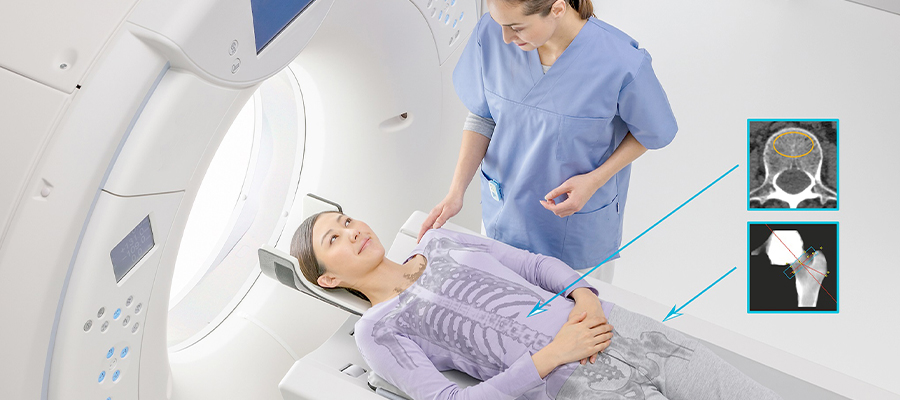
Estimated reading time: 10 minutes 24 seconds
Bone density measurement methods in osteoporosis diagnosis and the advantages of QCT
QCT bone density measurement is one of the methods that helps evaluate bone health, not only after a fracture has occurred but also before the risk has emerged. Since bone density often decreases without symptoms, many of us only become aware of this condition during a measurement. It is also possible to clarify the diagnosis of osteoporosis, commonly known as bone loss, with QCT.
In this article, we address step by step how osteoporosis develops, which symptoms should be considered, bone measurement methods, and in which situations QCT is preferred.
What is osteoporosis?
Osteoporosis, commonly known as bone loss, is a condition in which bones gradually lose density and become more fragile over time. Healthy bone tissue is a living structure that constantly renews itself. However, when this balance is disrupted, our bone density decreases, and our bones begin to weaken from within.
Since this process often progresses without symptoms, osteoporosis is usually detected late. While daily life continues normally, bone density may slowly decrease. Therefore, osteoporosis is often discovered after a fracture caused by a fall or incidentally during a bone measurement. Detecting this condition early is important in reducing the risk of future fractures.
What are the symptoms of osteoporosis? When should we suspect it?
The most insidious aspect of osteoporosis is that it often does not cause obvious discomfort. Because bone density decreases gradually over the years, pain or discomfort may not occur in the early stages when osteoporosis begins. Still, some situations may be warning signs for osteoporosis.
The main osteoporosis symptoms to watch for include:
- Noticeable loss of height
- Stooping or a change in posture in the back region
- Fractures occurring even with mild falls or impacts
- Unexplained back and lower back pain
- Wrist, hip, or spinal fractures occurring easily
When such situations arise, it is important not only to focus on relieving pain but also to investigate the underlying cause. An early bone density evaluation can help detect osteoporosis and ensure that necessary precautions are taken in time.
What causes osteoporosis? Who has higher risk factors?
There is no single answer to the question of what causes osteoporosis. Although bone tissue has a structure that renews itself throughout life, this renewal process may be disrupted with advancing age. When this balance is disturbed, our bone density gradually decreases, and bones may become more fragile.
In some individuals, osteoporosis may begin earlier or progress more rapidly. Especially, the following conditions increase osteoporosis risk:
- Advanced age
- Postmenopausal period
- Family history of osteoporosis
- Vitamin D and calcium deficiency
- Sedentary lifestyle
- Long-term use of corticosteroid-containing medications
- Smoking and alcohol use
- Chronic diseases
The presence of these risk factors does not always mean osteoporosis will occur, but bone health evaluation becomes more important in these individuals. Therefore, if you are in a risk group, bone density measurement is helpful for early diagnosis.
What is bone measurement, and why is it performed?
Bone density measurement is a diagnostic method that assesses the mineral density of bones and indicates how strong the bones are. The aim is not only to detect existing osteoporosis but also to predict the risk of future fractures in advance.
Since osteoporosis often progresses without symptoms, evaluation based solely on complaints may not be sufficient. Therefore, bone density measurement is recommended, especially in individuals in risk groups or when unexpected fractures occur. Through this measurement, the condition of the bones is assessed numerically, and preventive treatments can be planned early if necessary.
How is bone measurement performed? What methods are used?
The question of how bone measurements are performed is among the most frequently asked and intriguing in this topic. Bone density measurement is performed with different imaging methods, as discussed below, and during the procedure, the mineral density of bones is calculated numerically using specialized devices.
Today, the most commonly used method in bone measurement is the DEXA bone densitometry examination. In this method, bone density is usually evaluated in the lumbar spine and hip regions and compared with reference values.
In addition, in some cases, computed tomography-based measurements may also be preferred. Especially in individuals where standard measurements do not provide clear information, a more detailed evaluation with different techniques is possible.
The physician will determine which method is appropriate, taking into account the patient’s age, risk factors, and health condition. One of these measurement methods, QCT, can provide more detailed information in certain situations. Now let’s take a closer look at what the QCT method is.
What is QCT in bone density measurement? What are its advantages?
When a more detailed evaluation is required in addition to standard measurements, this method raises the question of what QCT is. QCT, known as quantitative computed tomography, is a method that measures bone mineral density volumetrically using computed tomography technology. In this method, our bones are not only imaged but also analyzed three-dimensionally. Thus, more detailed information about the true density of bone tissue is obtained.
One of the important differences of the QCT method is that it can evaluate the spongy structure inside the bone separately. Osteoporosis often begins first in this region. Therefore, QCT can be a helpful method for early diagnosis. In addition, while age-related calcification or structural changes in the spine may make bones appear stronger than they are in DEXA measurements, QCT is less affected by such factors and provides more accurate results.
Thanks to QCT, osteoporosis can be detected earlier in individuals in risk groups and fracture risk can be assessed more accurately. This method is the preferred way to measure bone density, especially when the results are unclear or early diagnosis is crucial.
Frequently Asked Questions
What is the QCT bone density measurement?
QCT bone density measurement is an imaging method that enables three-dimensional and volumetric measurement of bone mineral density using computed tomography technology. Since this method can evaluate the internal structure of bone tissue, it may help detect osteoporosis at an early stage.
Who is QCT bone measurement recommended for?
QCT bone density measurement is not necessary in every case. It is generally preferred in individuals where other methods do not provide sufficient information or where osteoporosis risk needs to be evaluated in more detail.
QCT scanning may be recommended, especially in the following situations:
- Individuals in the postmenopausal period with suspected osteoporosis
- Individuals in whom DEXA measurement may be misleading due to spinal calcification
- Those who use corticosteroids or similar medications long-term
- Individuals who need evaluation for metabolic bone disease
In these individuals, a more detailed examination of bone structure helps determine fracture risk more accurately. The appropriate method is decided after the physician’s evaluation.
What is the difference between QCT and DEXA?
DEXA is the most commonly used standard method that measures bone density two-dimensionally. QCT evaluates bone density three-dimensionally and volumetrically. When there is calcification or structural change in the spine, DEXA results may be misleading, whereas QCT is less affected by these factors and can more accurately reflect the true bone density.
Who should undergo bone density measurement?
Bone density measurement is especially recommended for postmenopausal women, older adults, individuals using long-term corticosteroids, those with a history of osteoporosis, and people who have experienced fractures with low trauma. In individuals with risk factors, performing measurements for early diagnosis helps reduce fracture risk.
Can osteoporosis be detected before symptoms appear?
Yes, it is possible to diagnose osteoporosis before symptoms appear. Osteoporosis often progresses without symptoms. Therefore, bone density measurement enables the detection of osteoporosis at an early stage. Especially in individuals in risk groups, regular bone measurement may help diagnose the disease before it develops.
When is QCT bone measurement preferred?
QCT bone measurement is generally preferred when DEXA results are unclear, in individuals with spinal calcification, in suspected metabolic bone disease, or when osteoporosis risk needs more detailed evaluation. It may be recommended by a physician in special situations where early diagnosis is important.