

 TR
TR FR
FR ES
ES RU
RU RO
RO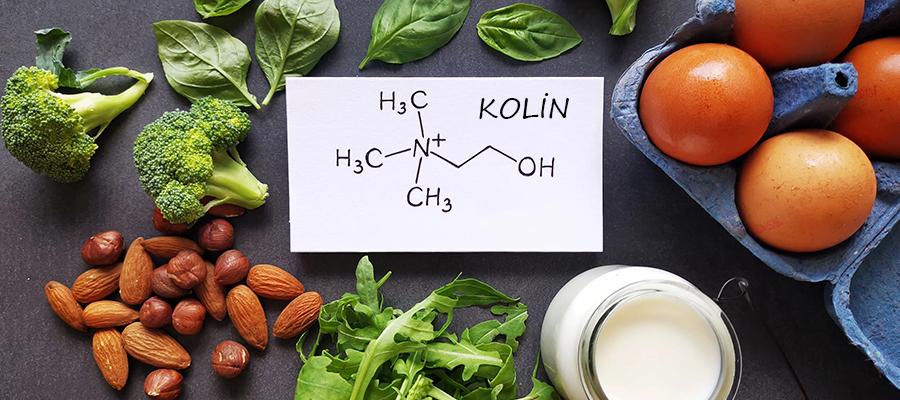
Estimated reading time: 12 minutes 14 seconds
What you need to know about choline
Do you feel mentally tired easily during the day, have trouble focusing, or feel that your body does not respond as quickly as it used to, even though you pay attention to your diet? Although we experience similar feelings, we often try to explain them with a busy schedule, stress, or lack of sleep. However, in some cases, a much smaller yet highly impactful nutrient that is often overlooked may be the real reason behind this picture.
In recent years, choline has been increasingly associated with brain health, memory, liver function, and metabolism, drawing attention precisely at this point. Even though many of us may be hearing its name for the first time, choline is an important building block that works at the cellular level in the body, whose deficiency can progress unnoticed and directly affect daily quality of life.
In this article, we will address the most frequently asked questions about choline. If you find yourself thinking, “I actually eat quite healthily, but it still feels like something is missing,” this article may offer answers to your questions.
What is choline?
Choline is a vital nutrient that is often mistaken for a vitamin but is not technically classified as one. It is associated with B vitamins because it uses similar metabolic pathways in the body and performs critical functions, especially at the cellular level. Choline is a nutrient that plays a role in many essential processes, from maintaining the structure of cell membranes and communication between nerve cells to liver health and brain development.
The increasing pace of daily life, constant pressure to complete tasks, frequent exposure to stress, intense mental workload, and changes in our dietary habits have made our need for choline more apparent. Choline, particularly due to its close relationship with the brain and nervous system, has become increasingly prominent in content focused on both health and mental performance in recent years. Considering all of this, gaining a deeper understanding of choline and its functions, as well as its sources, has become more important than ever.
Our bodies can produce choline in limited amounts, but this production is often not sufficient. For this reason, we need to obtain choline regularly through our diet. So which foods contain choline? We will answer this question in this article as well, but first, let’s take a closer look at what choline does.
What does choline do?
Choline is a nutrient that plays multiple roles in the body rather than being limited to a single function. One of its most important effects is contributing to the production of the neurotransmitter acetylcholine, which enables communication between nerve cells. This directly links choline to cognitive processes, such as memory, learning, and focus. It has probably started to catch your interest now, hasn’t it? Then let’s continue.
Choline is also necessary for the transport and metabolism of fats in the liver. When sufficient choline is not consumed, the transport of fats from the liver decreases, which can result in increased fat accumulation in the liver.
Another function of choline is supporting cell integrity and healthy cell function by being a component of cell membranes. When all these effects are considered together, it becomes clearer why choline is so important for both metabolic health and nervous system health.
Which foods contain choline?
Choline is found in both animal and plant-based sources. However, in terms of quantity, animal foods are generally richer in choline. Although we may be consuming choline without realizing it in our daily diet, some foods stand out in this regard.
Some choline-rich foods can be listed as follows:
- Egg yolk
- Liver and organ meats
- Red meat and chicken
- Fish (especially salmon)
- Milk and dairy products
- Legumes
- Broccoli and cauliflower
- Nuts and seeds
In individuals whose diet is predominantly plant-based, choline intake may be more limited. For this reason, dietary variety is an important factor in meeting choline needs for these individuals.
Do eggs contain choline?
Yes, eggs are one of the richest and most well-known sources of choline. The yolk, in particular, is the part of the egg where choline is concentrated. One large egg can provide a significant portion of the daily choline requirement.
For this reason, eggs stand out as a practical and nutritious source of choline. For individuals who want to increase their choline intake, eggs can be a strong component of a balanced diet.
Another important point to mention is that the way an egg is cooked does not change its choline content. Whether you eat your egg boiled or pan-cooked, the egg yolk remains a rich source of choline in every case.
What is the daily choline requirement?
The daily choline requirement may vary depending on age, sex, and special physiological conditions. Generally, the recommended daily intake for adults is approximately 425 mg for women and 550 mg for men.
This need may increase during pregnancy and breastfeeding. However, what matters here is not only the numerical values but also meeting this requirement regularly and in a balanced way. If the daily diet includes choline-rich foods, most individuals may not need additional supplementation.
What are the symptoms of choline deficiency?
Choline deficiency usually progresses silently, and its symptoms are often attributed to other causes. However, when choline insufficiency persists in the body for a long time, some signs may become noticeable.
Conditions that may be seen in choline deficiency include:
- Persistent fatigue and weakness
- Problems with focus and memory
- A tendency toward fatty liver
- Muscle pain or weakness
- Mood fluctuations
These symptoms do not definitively indicate choline deficiency on their own, but they may be signals worth considering in individuals with inadequate dietary patterns.
Who should use choline supplements?
Choline supplementation is not routinely necessary for everyone. However, in some groups, choline needs may increase, or sufficient intake may not be achieved through food alone.
Situations in which choline supplementation may be considered include:
- People who do not consume eggs or animal foods
- Those working in jobs that require intense mental performance
- Individuals at risk of fatty liver
- People who are pregnant or breastfeeding
- Individuals with long-term unbalanced diets
Supplement use should always be planned according to individual needs and, when necessary, in consultation with a healthcare professional.
Is it better to get choline from supplements or from foods?
The body generally uses choline obtained from foods in a more balanced and safer way. In addition, choline-containing foods provide not only choline but also other vitamins, minerals, and proteins.
Supplements can be a supportive option when sufficient intake cannot be achieved through diet. However, the ideal approach is always to prioritize natural food sources and consider supplements as a complementary option.
Does choline strengthen memory?
Choline is closely associated with memory and learning processes. The main reason for this is its role in the production of acetylcholine, which enables communication between brain cells. Adequate choline intake can contribute to the healthy functioning of cognitive processes.
However, choline alone is not a miraculous memory booster. Without being supported by a balanced diet, proper sleep, and mental activities, choline by itself does not create a meaningful difference. When all of these factors come together, choline’s supportive effect on memory may become more apparent.
Frequently Asked Questions
Does choline burn fat?
Choline is not a direct “fat burner.” However, because it plays a role in fat metabolism, it indirectly supports these processes. Its assistance in transporting fats in the liver is particularly important for metabolic balance.
For this reason, choline should be considered not as a substance that triggers fat burning, but as a factor that contributes to the healthy functioning of fat metabolism.
Does choline help with weight loss?
Choline does not have a direct weight-loss effect on its own. However, thanks to its contribution to metabolic processes, it may play a supportive role in the weight-loss process. Especially when combined with a balanced diet and physical activity, it may provide indirect benefits. Therefore, in weight management, choline should be considered not as a primary determinant but as a supportive building block.
When should choline supplements be taken?
Choline supplements are generally taken with meals or in the early hours. This type of use can increase digestive tolerance and reduce stomach discomfort.
However, the timing of supplementation may vary depending on the form used and individual needs. For this reason, regular use is more important than a specific time of day.
Are there any side effects of choline?
Choline is generally considered safe. However, as with many things, taking choline in high doses may cause some side effects. These may include nausea, increased sweating, and, rarely, changes in body odor. Such effects are usually seen when intake exceeds recommended doses.
What happens if too much choline is consumed?
Excessive intake of choline may cause undesirable effects in the body. Especially at very high doses, it can lead to digestive discomfort and a drop in blood pressure.
For this reason, the approach of “the more, the better” does not apply to choline. Balanced intake is always the safest approach.
Can choline be used during pregnancy?
Choline requirements increase during pregnancy because choline plays an important role in the development of the baby’s brain and nervous system. For this reason, adequate choline intake during pregnancy is particularly important. However, supplement use should always be planned in consultation with a healthcare professional.
Is choline necessary for children?
Yes, choline is also necessary for children. It is an important nutrient, especially during periods of growth and brain development. In most cases, children’s choline needs can be met naturally through a balanced diet. Supplementation should be evaluated only in special situations and with professional guidance.