

 TR
TR FR
FR ES
ES RU
RU RO
RO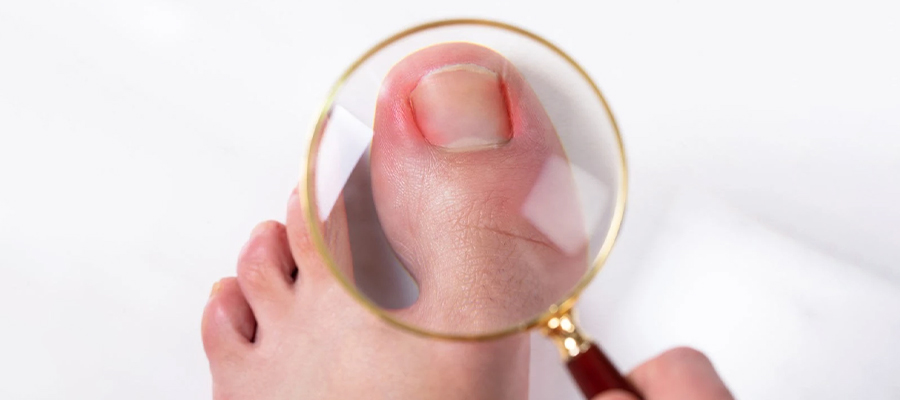
Estimated reading time: 6 minutes 4 seconds
What Causes Ingrown Nail?
An ingrown toenail, a very uncomfortable health problem, occurs when the edge of the toenail grows into the surrounding skin. This condition, which is particularly common in the thumbnail, causes the nail to become red, swollen, and sometimes infected. Ingrown toenails can occur for many reasons, some of which are preventable, while others are related to genetic foot problems.
We can list the factors that cause ingrown toenail formation as follows:
- Incorrect Nail Cutting: Cutting nails too short and cutting rounded nail corners can cause nails to grow into the cuticle instead of growing straight.
- Tight or ill-fitting shoes: Tight shoes that put excessive pressure on the toes can push the nail into the skin surrounding the nail, causing ingrown toenails.
- Toe Injuries: Repeated trauma to the nail from pinching the toe, dropping something heavy on it, or running and similar activities can cause ingrown toenails.
- Genetics and Nail Shape: People with genetically curved or thick nail structures may have ingrown nails.
To treat ingrown toenails, it is important to understand the cause of the ingrown nail. After the cause of ingrown nail is understood, ingrown nail can be prevented by taking preventive measures.
What is Good for Ingrown Nail?
Depending on the stage of the ingrown nail, the treatment method to be applied may also differ. In cases where an ingrown nail is in the early stage, ingrowing can be prevented with self-care. However, medical intervention may be required for advanced ingrown nails.
When treating ingrown toenails, if there is inflammation, it should be treated first to prevent infection. The next step is to use the correct nail-cutting technique for proper nail growth, choosing appropriate footwear, and following hygiene rules.
We can list what you can apply against the ingrown nail problem as follows:
- Soaking the Foot: Regularly soaking the foot in warm salt water for 15-20 minutes softens the skin and helps reduce inflammation.
- Antiseptic Ointments: An over-the-counter antibiotic cream can help the healing process by preventing infection.
- Suitable Shoes: Wearing sandals or comfortable shoes that keep the toes open can prevent symptoms from worsening.
- Gentle Nail Removal: A small piece of cotton or dental floss can be used to help the ingrown nail grow in the right direction. However, this method should only be used when the ingrown nail is mild and infection has not occurred.
- Pain Management: Over-the-counter painkillers (such as ibuprofen or acetaminophen) can be used when an ingrown nail causes pain.
Keep in mind that if all these measures do not provide relief and symptoms persist or worsen (such as pus or increased redness), seek medical attention.
When should I see a doctor for an ingrown toenail?
Ingrown toenails that are not too severe and not inflamed can usually be treated with home remedies. However, if there is no improvement despite all the measures you take, then medical intervention will be required.
You should see a doctor if you have the following conditions:
- Redness, swelling, pus, or pain in the toe
- If the person has diabetes, poor circulation, or another condition that increases the risk of infection
- In case of ingrown toenails that persist despite all measures taken
- In cases where walking becomes difficult due to pain
- When the area around the nail feels warm to the touch, as this may indicate an infection
What can be done for severe or recurrent ingrown toenails?
People who take all precautions to prevent ingrown toenails after ingrown toenail treatment may experience ingrown toenails again. It is best to seek medical support to prevent this type of recurring ingrown toenail problem.
Some of the most common medical interventions preferred as a solution to the problem of recurrent ingrown toenails can be listed as follows:
- Partial Nail Removal (Wedge Resection): In this intervention performed under local anesthesia, the ingrown part of the nail is removed while the rest of the nail is preserved and long-term relief is provided.
- Total Nail Removal (Matrixectomy): In this method, which is used in severe ingrown toenails, the entire toenail can be removed and the nail matrix (the area where the nail grows) is treated to prevent ingrown nails again.
- Antibiotic Treatment: In cases where an ingrown toenail causes an infection, oral or topical antibiotics may be prescribed to clear the infection.
- Corrective Procedures: In some cases, permanent procedures may be needed to prevent the toenail from growing inward again.
Can Ingrown Toenails Be Prevented?
It is much easier to prevent ingrown toenails than to treat them. Often, simple changes and precautions can significantly reduce the risk of ingrown toenails.
We can list some of the things that can be done to prevent ingrown toenails as follows:
- Proper Nail Cutting: Make sure you cut your toenails straight and not too short, without rounding the corners.
- Choosing the Right Shoes: Avoid shoes that are too narrow and will put pressure on your toes. Choose comfortable shoes.
- Foot Hygiene: Keep your feet clean and dry and use moisturizer to prevent the skin around the nail from becoming too hard.
- Be Careful When Getting a Pedicure: If you are having a pedicure, make sure that the instruments used are sterilized.
- Protect Your Feet: If you participate in sports or activities that put pressure on your toes, consider wearing protective footwear to prevent trauma.
In the later stages, ingrown toenails can be quite painful and uncomfortable, especially when walking. By following these preventive measures, you can minimize the chances of ingrown toenails and have healthy feet.