

 TR
TR FR
FR ES
ES RU
RU RO
RO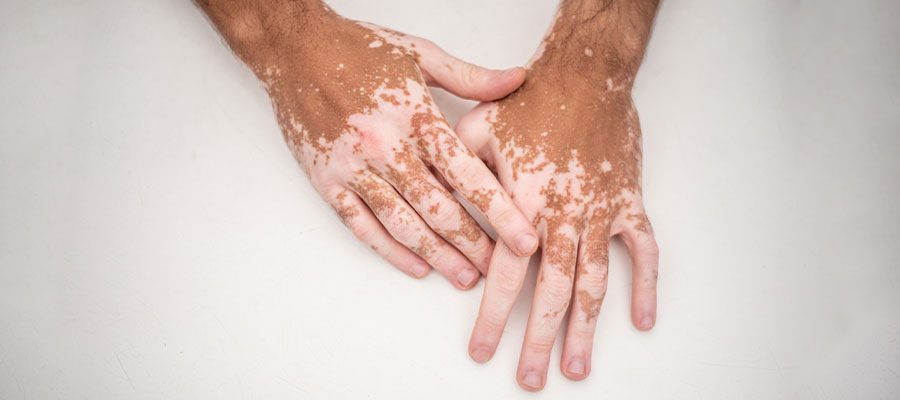
Estimated reading time: 9 minutes 17 seconds
What is vitiligo?
Vitiligo is a skin condition that primarily affects areas such as the hands, face, elbows, and knees, causing the skin in these areas to become noticeably different in color from the surrounding skin. The size, spread, and location of the white patches can vary from person to person.
Under normal conditions, the pigment responsible for the color of our skin is melanin. This pigment is produced by cells called melanocytes. When these cells are damaged or become dysfunctional, a pigment deficiency occurs in the skin. As a result, vitiligo patches appear in various areas of the skin.
The global prevalence of vitiligo ranges from 1% to 2%. Vitiligo can occur in people of all ethnicities, but it may be more bothersome in individuals with darker skin tones due to the color contrast it causes. This discomfort stems from the fact that vitiligo is characterized by visible color differences when observed from the outside. However, in recent years, some brands have used models with vitiligo in their product advertisements, contributing to increased awareness of the condition.
What are the symptoms of vitiligo?
Vitiligo is a condition caused by a lack of melanin pigment. The first and most important symptom that appears when this pigment is missing is white spots with clearly defined beginning and ending borders, which are clearly different from the rest of the skin.
These patches usually start small and can gradually increase in size over time. In some cases, mild itching may be observed before color differences appear. However, there is usually no pain or itching in these areas. The patches most commonly affect areas exposed to the sun, such as the face, neck, hands, and arms. However, they can also affect mucous membranes (inside the mouth, nose, genital area, etc.), the eyes, and the scalp. Hair in areas affected by vitiligo may also be affected and turn white.
Other symptoms may include:
- Symmetrical white patches: Color differences are usually seen on both sides of the body, with one side being almost symmetrical to the other.
- Progression of patches: Patches may remain stable for years or suddenly begin to spread, causing new patches to appear.
- Loss of pigment in body hair: If the affected areas include the area around the eyes, cheeks, or scalp, whitening of the eyelashes, eyebrows, beard, or hair may occur.
- Sensitivity to sunlight: Affected skin may be more prone to sunburn due to a lack of melanin.
Vitiligo typically does not cause physical discomfort such as itching or pain, but visible changes, especially in prominent areas of the body, can lead to significant emotional effects.
What causes vitiligo?
The exact cause of vitiligo is unknown. However, it is believed that genetic inheritance, autoimmune disorders, exposure to certain chemicals, and other environmental factors may contribute to its development.
In individuals with vitiligo, the immune system mistakenly identifies melanocytes—the cells responsible for producing pigment in the skin—as harmful invaders and attacks them as part of its defense mechanism. As a result of this attack, the melanocytes in the affected area are either completely destroyed or lose their function. This leads to partial or complete loss of pigment in those areas and the appearance of white patches.
The following factors have been identified as potential triggers for the onset of vitiligo:
- Autoimmune response: Vitiligo is often associated with autoimmune diseases such as thyroid disorders. This suggests that the immune system plays a central role in the onset of vitiligo.
- Genetic predisposition: Genetic inheritance is often seen in vitiligo or related autoimmune diseases. The role of genetic inheritance in vitiligo is approximately 30%.
- Environmental factors: Certain events such as sunburn, skin trauma, exposure to various chemicals, or emotional stress can play a triggering role in people who are predisposed to this disease.
- Neurogenic factors: Some theories suggest a link between nerve endings and melanocyte damage, but research on this topic is still ongoing.
In conclusion, vitiligo is a complex condition caused by multiple factors, and specific triggers may vary from person to person.
Is vitiligo hereditary?
When discussing the factors that may cause vitiligo, we mentioned the role of genetic inheritance. Vitiligo has a genetic component, but it is not considered entirely hereditary like some diseases. Instead of following a clear pattern of inheritance, vitiligo tends to run in families. This means that a person with a close relative who has vitiligo may have a slightly higher risk of developing the condition, but it is not guaranteed.
Scientists believe that many genes, especially those involved in regulating the immune system, contribute to susceptibility to this disease. However, inheriting these genes does not guarantee that a person will develop vitiligo. So yes, genetics plays a role to some extent, but it is not the only determining factor. Environmental factors or factors related to immunity are also very important.
In summary, genetic factors may increase the likelihood of developing vitiligo, but it does not pass directly from parents to children in a predictable manner.
Is vitiligo dangerous?
Vitiligo is not an internal organ disease that affects the condition of internal organs. Therefore, it is not considered medically dangerous, does not cause physical harm, and does not lead to life-threatening complications. It affects the skin but is not skin cancer and does not increase the risk of cancer. In most cases, vitiligo is a dermatological condition that only affects the appearance of the skin without causing pain or physical discomfort.
However, because the areas affected are often visible at first glance, such as the face, hands, and elbows, it can significantly affect a person’s self-confidence, desire to socialize, and emotional well-being. People with vitiligo may not want to socialize and may become withdrawn, especially if they have had negative experiences in new environments in the past. Therefore, emotional support and, in some cases, counseling can play an important role in managing this condition.
How is vitiligo treated?
Vitiligo treatment is based on restoring the appearance of the areas of the skin affected by vitiligo to their original state or, in some cases where the spots are very scattered, eliminating all pigmentation. Although there is no cure that works for all patients, there are various treatment options that can help improve the appearance of the affected areas or slow the progression of the disease.
Treatment selection can be planned based on factors such as the degree of pigment loss, the areas of the body affected, and the individual’s preferences. Let’s take a closer look at these treatment options below.
The common treatment options used for vitiligo include the following:
- Topical corticosteroids and calcineurin inhibitors: These creams can help restore some pigment, especially when used in the early stages of the disease.
- Light therapy (phototherapy): Narrowband UVB light is commonly used to stimulate repigmentation in localized or widespread vitiligo.
- Depigmentation: In rare cases where the spots are widespread and irregular, instead of repigmentation, the remaining normal skin can be depigmented to lighten the skin color and achieve a more uniform appearance.
- Surgical options: Skin grafting or melanocyte transplantation may be considered for stable, localized vitiligo that does not respond to other treatments.
- Camouflage cosmetics: Although not a treatment method, special makeup or bronzing products can temporarily even out skin tone by covering white patches.
However, it is important to note that results may vary from person to person, and no treatment guarantees complete repigmentation. Therefore, in cases where treatment does not yield the expected results, psychological support and managing expectations are just as important as physical treatments.