

 TR
 FR
 ES
 RU
 RO
Estimated reading time: 8 minutes 52 seconds
What you need to know about the diagnosis and treatment of vascular occlusion
Vascular occlusion is a systemic health condition that directly affects the body’s vital functions and can lead to serious complications if not treated early. The success of the diagnosis and treatment process depends on recognizing the condition at the right time, addressing it through a multidisciplinary approach, and ensuring that the patient fully adheres to the treatment plan.
This condition is not an isolated problem affecting only a single organ. It is a complex health issue that may require a joint evaluation by specialists in cardiology, cardiovascular surgery, neurology, and radiology. Since every patient’s vascular structure, degree of blockage, and overall health status differ, treatment planning follows a personalized strategy rather than a standardized approach. Factors such as the patient’s age, kidney function, and additional chronic diseases are taken into consideration.
Early screening, when symptoms are still in their initial stages or risk factors have not yet become apparent, allows physicians to intervene before tissue and organ damage develops. Furthermore, patients’ understanding of their condition, the mechanisms of action of their medications, and the warning signs of potential emergencies is one of the most important factors directly contributing to treatment safety and effectiveness.
In this article, we examine vascular health, which plays a critical role in maintaining and preserving bodily functions, with a particular focus on vascular occlusion.
What is vascular occlusion? How does it develop?
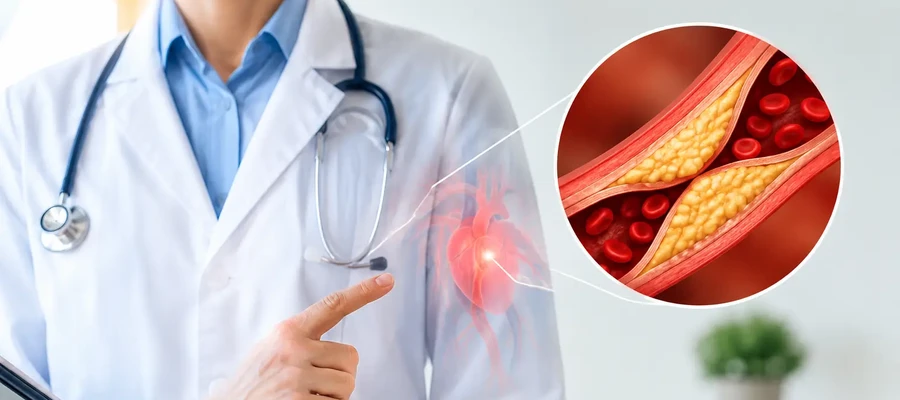
Let’s begin by explaining what vascular occlusion is. It generally occurs when plaques formed by the accumulation of fat, cholesterol (see: What causes cholesterol?), calcium, and cellular debris in the arterial walls restrict blood flow. This process is called atherosclerosis. Over time, the plaque that develops within the artery may grow and narrow the vessel’s lumen, or a blood clot forming on its surface may suddenly block the artery. This is known as vascular occlusion.
The location of the blockage is also important. Arterial occlusion may affect the coronary arteries that supply the heart, the carotid arteries that carry blood to the brain, the renal arteries, or the arteries in the legs. In addition, blood clots forming in veins can also disrupt blood flow. This condition, known as deep vein thrombosis (DVT), differs from arterial disease in terms of its underlying mechanism and treatment. However, it must be taken seriously because of the risk of a clot traveling to the lungs.
Atherosclerosis generally progresses over many years. In contrast, sudden blockages may occur when a blood clot develops on an existing plaque or when a clot originating in the heart travels to another blood vessel. Acute vascular occlusions may require emergency intervention, particularly when they affect circulation in the heart, brain, or limbs.
What are the symptoms?
So, what are the symptoms of vascular occlusion? Is it possible to recognize the symptoms without medical imaging? Yes, certain symptoms can be observed without imaging, and these may vary depending on the affected organ and the degree of vessel blockage. Let’s examine these symptoms under separate categories below.
Coronary artery (heart) occlusion:
- Pressure, tightness, or a burning sensation in the chest during physical exertion
- Pain radiating to the left arm, back, jaw, or upper abdomen
- Shortness of breath, cold sweats, nausea, and extreme fatigue
Note: Women, older adults, and patients with diabetes may not experience typical chest pain. Instead, they may present only with shortness of breath or fatigue.
Cerebral artery occlusion:
- Facial drooping or loss of facial symmetry
- Sudden weakness, numbness, or loss of sensation in an arm or leg
- Difficulty speaking, finding words, or understanding speech
- Vision loss, double vision, and sudden balance problems
Note: Even if these symptoms disappear quickly, they may indicate a transient ischemic attack (TIA), and an immediate medical evaluation is necessary because of the risk of a subsequent stroke.
Leg artery occlusion:
- Pain in the calf, thigh, or hip that begins while walking and disappears with rest (intermittent claudication)
- Coldness, paleness, or bluish discoloration of the feet in advanced stages
- Non-healing wounds on the feet and toes, and severe pain that persists even at rest
Venous occlusion (DVT):
- Sudden swelling, pain, increased warmth, and redness, usually affecting only one leg
- If sudden shortness of breath, chest pain, or coughing up blood occurs, emergency medical attention should be sought because of a possible pulmonary embolism
When should I seek emergency medical attention?
If symptoms such as newly developed chest pain or chest pain lasting longer than 10 minutes, sudden neurological symptoms, sudden coldness and severe pain in one leg, or sudden shortness of breath occur, patients should not wait for these symptoms to resolve on their own.
These symptoms may be associated with a heart attack, stroke, acute limb ischemia, or pulmonary embolism. Rather than taking medication on their own and waiting for the symptoms to disappear, patients experiencing these conditions should seek emergency medical care.
Why are risk factors important?
Vascular disease is rarely caused by a single factor. Age, a family history of cardiovascular disease at an early age, and certain genetic characteristics are non-modifiable risk factors that may contribute to the development of the condition. However, several modifiable risk factors can also increase the likelihood of vascular disease. Smoking, high blood pressure, diabetes, elevated LDL cholesterol levels, excess weight, physical inactivity, and unhealthy dietary habits are among these factors and can be addressed through appropriate lifestyle changes and medical care.
Chronic kidney disease, sleep apnea, and certain rheumatic diseases may also increase vascular risk. When multiple risk factors are present together, the resulting risk may be greater than the sum of their individual effects. For example, a person who has diabetes and smokes is at an increased risk of developing peripheral artery disease in the legs.
Even in the absence of symptoms, regular monitoring of blood pressure, blood glucose, and blood lipid levels is fundamental to prevention. For individuals with a family history of vascular occlusion, the timing and scope of medical evaluations should be determined by a physician according to the patient’s age and accompanying risk factors.
Diagnosis of vascular occlusion
The diagnostic process begins with a detailed medical history and a physical examination conducted by a physician. During the examination, the presence and symmetry of pulses, blood pressure measurements, and signs of circulatory impairment are assessed. Blood tests are used to evaluate cholesterol levels, blood glucose, kidney function, and coagulation parameters. Imaging and diagnostic methods can be listed as follows:
- Doppler ultrasonography: A first-line method for evaluating blood flow and detecting narrowing in the arteries of the legs and neck (carotid arteries).
- Exercise stress testing and echocardiography (ECHO): Used to assess heart function under physical stress and examine cardiac structure when coronary artery disease is suspected.
- CT angiography and MR angiography: Provide three-dimensional images of cerebral, coronary, or peripheral blood vessels without the need for catheter insertion.
- Invasive coronary/peripheral angiography: A reference-standard procedure performed using thin catheters inserted into blood vessels. It provides detailed diagnostic information and may allow treatment during the same session.
What are my treatment options?
The treatment of vascular occlusion aims not only to reopen blocked blood vessels but also to protect the entire vascular system and minimize the risk of future heart attacks or strokes. In this context, treatment involves several approaches, ranging from lifestyle modifications to surgical interventions. Let’s take a closer look at these treatment options.
Lifestyle modifications:
- Completely quitting smoking and all other tobacco products
- Following a Mediterranean-style diet rich in vegetables, fruits, whole grains, olive oil, and fish
- Engaging in regular weekly walking or exercise programs approved by a physician
Medication:
- Blood thinners (antiplatelet agents/anticoagulants): Used to prevent the formation of blood clots.
- Cholesterol-lowering medications (statins): Help stabilize plaques and slow their progression.
- Blood pressure and blood glucose medications: Help reduce damage and stress on blood vessel walls.
Interventional and surgical treatments:
- Balloon angioplasty and stenting: A procedure in which the narrowed or blocked section of a blood vessel is widened using a balloon, and a stent (a small mesh tube) may be inserted to help keep the vessel open.
- Bypass surgery: A surgical procedure in which a new pathway for blood flow is created using a blood vessel taken from another part of the body, particularly when blockages are extensive or affect multiple areas.
- Endarterectomy: A surgical procedure performed to remove plaque from an artery, particularly the carotid artery.
Is follow-up necessary after treatment?
Undergoing stent placement or surgery does not mean that vascular disease has been completely eliminated. Atherosclerosis is a systemic process that can continue to progress in other blood vessels. Therefore, regular follow-up, adherence to prescribed medications, and management of risk factors are just as important as the treatment itself.
Maintaining open communication with the healthcare team, reporting newly developed symptoms, and following the recommended monitoring schedule are essential components of safe care. Protecting vascular health often begins with small but lasting changes. Identifying changes early can significantly contribute to preventing serious complications in the future.
Technological advances and innovative approaches in vascular health
Thanks to advances in medical technology, more comfortable diagnostic and treatment methods with improved clinical outcomes are being used in the management of vascular occlusion.
- Intravascular ultrasound (IVUS) and OCT: These technologies provide cross-sectional images of the inner structure of blood vessels during angiography, helping physicians optimize stent selection and placement.
Drug-coated balloons and drug-eluting stents: Specially designed devices that release medication to reduce the risk of blood vessels narrowing again. - Atherectomy (plaque removal): A technique that uses specialized catheters to remove calcified and hardened plaques from blood vessels.
- Minimally invasive surgery: Bypass procedures performed through smaller incisions may significantly shorten recovery time and help patients return to their daily activities sooner.
Recommendations and warnings from Aktif International Hospital specialists
We asked our hospital’s physicians to share their recommendations for helping patients maintain good vascular health. We have compiled their key recommendations and warnings below.
- Do not neglect regular check-ups against silently progressing vascular disease: Vascular occlusion can progress without causing noticeable symptoms. Annual cardiovascular screening for individuals over the age of 40, even in the absence of symptoms, is strongly emphasized as an important preventive measure.
- Do not stop taking your medications without consulting your physician: Suddenly discontinuing prescribed antiplatelet medications after stent placement simply because you feel well may lead to acute blood clot formation inside the stent and potentially life-threatening complications. Any changes to medication should be made only under medical supervision.
- Do not mistake leg pain for a normal sign of aging: Leg pain that develops while walking and disappears with rest is not necessarily a natural consequence of aging. It may be an early warning sign of peripheral artery disease. Seeking medical attention at an early stage may help prevent future tissue damage.
- Adopt a holistic approach to healthy living: Medical interventions alone are not sufficient to maintain vascular health. Stress management, quality sleep, maintaining a healthy weight, and living without tobacco are among the strongest protective measures that directly influence treatment success.