

 TR
TR FR
FR ES
ES RU
RU RO
RO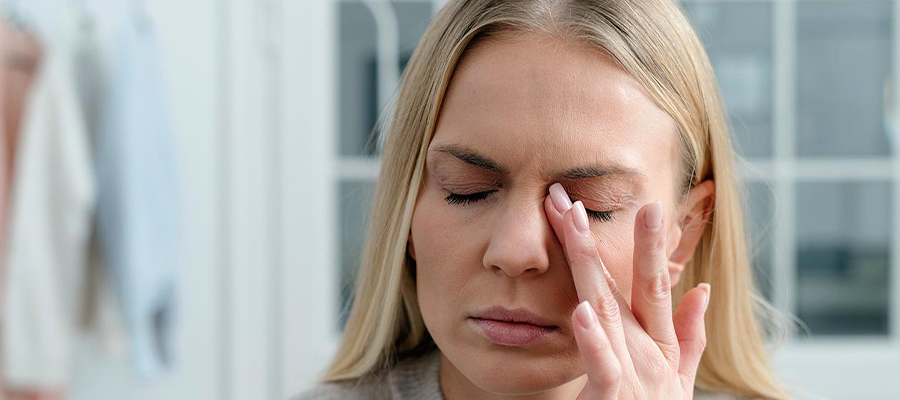
Estimated reading time: 10 minutes 36 seconds
What you need to know about dry eye
During the day, we spend long periods looking at digital screens, whether for school, work, or entertainment. Sometimes we become so focused that we even forget to blink. Do you experience burning, stinging, or a sensation as if there is sand in your eyes? After staring at a screen for a long time, do you feel the need to rest your eyes and notice a brief sense of relief when you blink?
These symptoms are often perceived as temporary discomfort or simple fatigue. However, sometimes the situation may not be as harmless as it seems. The symptoms listed above may be signs of dry eye. In short, screens, air-conditioned environments, and an intense work pace, which have become indispensable parts of modern life, can disrupt the natural balance of our eyes without us even realizing it.
In this article, we will step by step address the most frequently asked questions about dry eye, such as what dry eye is, what its symptoms are, and what causes it. If you want to learn why tears are so important for eye health, how dry eye manifests itself, and in which situations it should be taken seriously, you can continue reading.
What is dry eye?
Before answering the question of what dry eye is, it is helpful to first explain how our tears are produced and what functions they serve. Contrary to popular belief, tears are not produced only when we become emotional or cry. Our tears are produced continuously by the tear glands, almost as a reflex.
With every blink, the tears produced by the tear glands are evenly spread across the entire surface of the eye through the movement of the eyelids. Excess tears then drain through the tear ducts toward the nasal cavity.
Dry eye is a chronic condition that occurs when the tears produced to keep the eye surface healthy and comfortable are either insufficient in quantity or impaired in quality.
Tears are necessary not only to moisturize the eye, but also to nourish the corneal surface, protect against microorganisms, and provide clear vision. When the balance between tears and the eye is disrupted, the eye surface becomes vulnerable, and the person begins to experience uncomfortable symptoms in daily life.
Therefore, dry eye is much more than a simple discomfort. Especially in the long term, dry eye is an eye health problem that can significantly affect a person’s quality of life.
What causes dry eye?
There is no single cause of dry eyes; often, several factors combine to create this condition. However, some habits we have adopted in recent years have also contributed to its development. As you might guess, extended use of various digital screens is at the top of these habits.
Today, the widespread use of digital screens and the increase in screen time can lead to dry eye. While looking at different areas throughout the day, we normally blink frequently. However, when looking at digital screens, we may unconsciously reduce our blinking for long periods.
Environmental conditions and lifestyle habits are other factors that play a role in the increasing prevalence of dry eye. In addition, even if tear production is sufficient in some people, the structure of the tears may be impaired, which accelerates evaporation and again leads to dryness of the eye surface.
Hormonal changes, systemic diseases, and certain medications are also among the important underlying causes of dry eye.
What are the symptoms of dry eye?
Many people initially interpret these symptoms as fatigue or temporary discomfort. However, if the symptoms persist, the possibility that they are caused by dry eye should be considered.
The most common symptoms of dry eye can be listed as follows:
- Burning, stinging, or a gritty sensation in the eyes
- Redness and sensitivity
- Discomfort that increases after prolonged screen use
- Sensitivity to light
- Watery eyes (paradoxically)
- Eye fatigue that increases as the day progresses
Of course, symptoms may vary in severity from person to person and may worsen over time.
Is dry eye related to aging?
Yes, dry eye is closely related to aging, but it is not a problem limited only to older individuals. As age increases, the production capacity of the tear glands decreases, and the composition of tears may change. Let us explain what we mean by the composition of tears.
Tears are not a single, uniform fluid. They actually consist of three layers, each with a different function. The outermost layer is the oily layer, which prevents rapid evaporation of tears. The middle layer is mainly aqueous; this layer moisturizes the eye and carries oxygen and nutrients. The innermost mucin layer allows the tears to adhere to the corneal surface. When these three layers work together, the eye surface is protected, and clear, comfortable vision is achieved.
As age advances, disruptions may occur in this complex tear structure with its different functions. As a result, even if tears are produced, dry eye may still develop because the tears cannot perform some of their functions properly.
In addition, hormonal changes, especially after menopause, increase the risk of dry eye in women. However, dry eye is also commonly seen in younger individuals who use screens intensively, wear contact lenses, or work in air-conditioned environments.
Does wearing contact lenses cause dry eye?
Yes, contact lens use is one of the important factors that can trigger dry eye. Lenses can partially absorb the natural tear layer on the eye surface, increasing evaporation.
Especially long-term lens use, unsuitable lens materials, or inadequate lens hygiene can make dry eye complaints more pronounced. In people with dry eye, contact lens use may sometimes become intolerable. In such cases, alternative solutions should be considered.
Can dry eye cause blurred vision?
Dry eye is an important but often overlooked cause of blurred vision. The tear layer ensures that light is properly focused onto the retina. When this layer is disrupted due to dry eye, image clarity decreases, and the person may experience fluctuating blurriness, especially while reading, using a computer, or driving. This blurriness usually improves temporarily after blinking, but it recurs as dry eye persists.
Does dry eye lead to vision loss?
Mild to moderate dry eye usually does not cause permanent vision loss. However, in untreated, advanced, and chronic cases of dry eye, damage to the eye surface may occur.
When corneal ulcers, infections, and tissue damage develop due to dry eye, visual quality can be seriously affected. For this reason, dry eye should not be seen as “a simple complaint,” and long-lasting symptoms should be evaluated by a specialist.
What helps with dry eye?
There are some simple yet effective measures that can be applied in daily life to relieve dry eye. These measures help reduce symptoms by supporting the eye surface. Lifestyle adjustments, in particular, are an important part of treatment. Practices that are beneficial for dry eye include the following:
- Taking regular breaks during digital screen use
- Consciously increasing blinking frequency
- Humidifying the air
- Protecting the eyes from wind, air conditioning, and smoke
- Applying warm compresses to the eyelids
How is dry eye treated?
Dry eye treatment is planned according to the factors causing dry eye and the severity of the condition. The same treatment approach is not applied to every patient with dry eye. Instead, an individualized treatment plan is created. For some people, lifestyle changes alone may be sufficient, while in other cases, medical treatments are required. The main goals of treatment are to protect the eye surface, reduce inflammation, and restore tear balance.
Which eye drops are good for dry eye?
Drops used for dry eye aim to moisturize the eye surface by mimicking natural tears. However, not every eye drop is suitable for every patient. Therefore, when choosing drops for dry eye, factors such as whether the drop contains preservatives and how often it is used should be considered.
Commonly used types of drops for dry eye complaints include:
- Artificial tear drops
- Preservative-free single-dose drops
- Gel or thick-consistency moisturizing drops
- Special formulations that help repair the eye surface
The choice of eye drops should always be made under the recommendation of an ophthalmologist, and random product use should be avoided.