

 TR
TR FR
FR ES
ES RU
RU RO
RO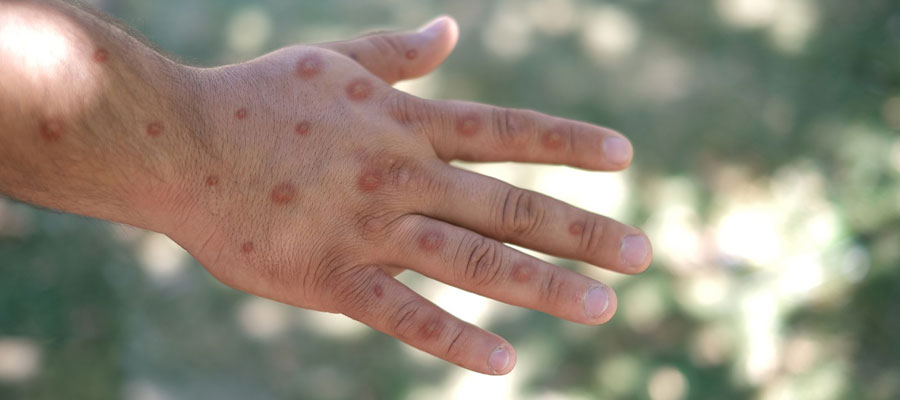
Estimated reading time: 6 minutes 58 seconds
What is monkeypox?
Monkeypox is an infectious disease caused by the monkeypox virus, which is from the same family as smallpox, called orthopoxvirus. Although they belong to the same virus family, smallpox is a disease with a much higher rate of transmission than monkeypox. In addition, the severity of the disease is milder than that of smallpox.
The monkeypox virus was first discovered in laboratory monkeys in 1958. However, it was first identified in humans in 1970. Although the disease was previously most commonly seen in central and western Africa, it has begun to appear in many different regions of the world in recent years.
Monkeypox manifests itself with certain skin-related symptoms and may also have flu-like effects. However, in most cases, this disease can be completely cured with treatment. Nevertheless, there is a risk of serious health problems if the disease is transmitted to people with weakened immune systems or ongoing illnesses.
In which countries is monkeypox found?
Since the 1970s, when the disease began to appear in humans, the monkeypox virus has been most prevalent in remote areas of Central and West African countries such as the Democratic Republic of the Congo, Nigeria, and Cameroon. These regions are considered endemic areas where the virus naturally occurs in certain animal populations.
However, since 2022, the monkeypox virus has been reported in many regions, including the United States, the United Kingdom, Canada, Germany, Spain, and other countries in Europe and the Americas, which are not endemic areas. With the virus spreading beyond endemic areas, scientists have begun to closely monitor changes in the conditions and speed of the disease’s spread.
What are the symptoms of monkeypox?
The incubation period for monkeypox can vary between 5 and 21 days. Symptoms that appear after the incubation period typically resemble the flu at first. However, these symptoms are later accompanied by rashes on the skin. Symptoms can last for 2-4 weeks.
The common symptoms of monkeypox can be listed as follows:
- Fever
- Chills and body aches
- Fatigue
- Swollen lymph nodes (this symptom is a distinguishing feature of monkeypox from smallpox)
- Headache and back pain
- Skin rash (typically starts on the face and then spreads to other parts of the body)
The rashes we mentioned typically begin as flat spots. Later, these patches may become raised. These raised areas then develop into fluid-filled blisters. In the final stage, the process typically completes with the formation of scabs and the eventual shedding of these scabs. Most people recover without complications, but some may develop scars or secondary infections.
Is monkeypox contagious?
Yes, monkeypox is contagious, but its transmission rate is much lower than that of other viral infections such as measles or COVID-19. The contagiousness of monkeypox can vary depending on the type and duration of contact with an infected person or contaminated material.
Monkeypox is considered contagious from the onset of the rash until the final stage when the rash scabs over and heals. Therefore, it is crucial to isolate the individual in the early stages of the disease until all symptoms have completely disappeared to minimize the risk of transmission.
How is monkeypox transmitted?
Monkeypox can spread from animals to humans and from humans to humans. Close and prolonged contact is particularly effective in the spread of the virus from person to person. The following factors are also among the causes of contagion:
- Direct contact with the skin lesions, body fluids, or scabs formed on the skin of an infected person
- Respiratory droplets from an infected person, especially during prolonged face-to-face interactions
- Through contaminated objects that an infected person has come into contact with, such as bedding, clothing, or towels
- Sexual contact, especially skin-to-skin contact with rashes
Transmission from animals to humans can occur through bites, scratches, or contact with infected animals, particularly rodents or monkeys. The virus has been found in certain species of squirrels, mice, and primates.
How is monkeypox treated?
There is currently no specific medication approved for the treatment of monkeypox. However, there are a number of measures that can be taken to alleviate symptoms and prevent complications in infected individuals. In mild to moderate cases, these measures focus on ensuring that the individual stays well-hydrated and gets plenty of rest.
However, in more severe cases, especially if the person has a weakened immune system, antiviral drugs originally developed for smallpox may be used. These drugs include the following:
- Tecovirimat (TPOXX): An antiviral drug that shows promise in the treatment of monkeypox in clinical settings
- Cidofovir and brincidofovir: Other antiviral medications that may be used in some cases
- Vaccinia immunoglobulin (VIG): Sometimes used in individuals with severe illness or complications
Hospitalization is generally not required unless complications arise during the course of the disease. Many infected individuals can recover at home in isolation and with careful management of symptoms to prevent transmission.
What are the ways to prevent monkeypox?
Both individual and public health measures should be taken to prevent monkeypox. It is also crucial to know what the symptoms are and to take precautions if they occur. Since the virus spreads through close contact, it is very important to understand and reduce the risk of exposure. Some protective strategies that may help prevent monkeypox include:
- Avoid close physical contact with individuals exhibiting symptoms, particularly those with redness or lesions. Remember that the risk of transmission persists until scabs have fallen off and the skin has returned to its normal appearance.
- Maintain good hand hygiene by using soap and water or alcohol-based hand sanitizers.
- Always use personal protective equipment when caring for infected individuals.
- Disinfect frequently touched surfaces and fabrics, such as bedding and clothing.
- Avoid contact with wild animals, especially in regions where monkeypox is endemic.
- Some monkeypox vaccines that have been approved may be recommended for high-risk groups, such as healthcare workers.
Preventing the spread of the monkeypox virus is one of the most important steps in combating the disease. Therefore, it is crucial that the public is aware of the symptoms of the disease and that infected individuals are quickly isolated if symptoms arise.